Loading...
First Round of Abstract Submission Ends: Dec 31, 2026
Extended Early Bird Ends: Sep 28, 2026

Plenary Speakers

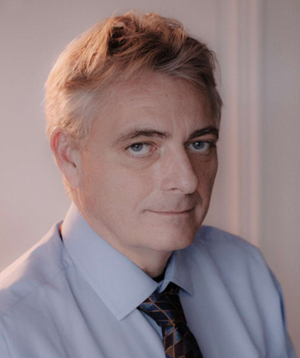
Prof. Guido Kroemer
Universite Paris Cite, France
Title: The ACBP/DBI–GABRG2 axis: an actionable pathogenic signaling system
Guido Kroemer is currently Professor at the Faculty of Medicine of the University of Paris-Cité, Director of the research team "Metabolism, Cancer and Immunity" of the French Medical Research Council (INSERM), Director of the Metabolomics and Cell Biology platforms of the Gustave Roussy Comprehensive Cancer Center, and Hospital Practitioner at the Hôpital Européen George Pompidou, Paris, France.

Dr. Kroemer’s work focuses on the pathophysiological implications of cell stress and death in the context of aging, cancer and inflammation. He discovered the ignition of regulated cell death pathways by mitochondrial membrane permeabilization, the cytoprotective and antiaging effects of macroautophagy, as well as the decisive role of immunogenic cell death in anticancer treatments.

With over 1,800 scientific articles, including 76 in CNS journals—Cell (17 papers), Nature (6), Nature Medicine (26), Science (18), and Science Translational Medicine (9), more than 490,000 citations and an h-index of 316, he is Europe’s most cited biomedical researcher and the most cited worldwide in biology and biochemistry (https://research.com/scientists-rankings/biology-and-biochemistry). Kroemer is the founding Editor-in-Chief of six journals: Cell Death & Disease, Cell Stress, Geromedicine, OncoImmunology, MedComm-Oncology, Microbial Cell, and Molecular & Cellular Oncology. He is the Editor-in-Chief of Seminars in Immunology. Dr. Kroemer is member of the Academia Europaea, Austrian Academy of Sciences, Chilean Academy of Sciences, Chinese Academy of Engineering, European Academy of Cancer Sciences (EACS), European Academy of Sciences (EAS), European Academy of Sciences and Arts (EASA), European Molecular Biology Organization (EMBO), German Academy of Sciences (Leopoldina) and Royal Spanish Academy of Sciences. He is the Founding President of the European Academy of Tumor Immunology (EATI), as well as the president of the European Network for Cancer Immunotherapy (ENCI).

Dr. Kroemer’s contributions have been recognized with numerous distinctions, including the European Union–sponsored Descartes Prize and two European Research Council Advanced Investigator Awards. He has also received the most prestigious cancer research honors from Belgium (Baillet-Latour Health Prize, Dautrebande Prize), France (Prix Duquesne, Prix Léopold Griffuel, Grand Prix Ruban Rose) and Switzerland (Brupbacher Prize), as well as the most generously endowed national science awards from Italy (Lombardia è Ricerca Prize) and Portugal (BIAL Biomedical Research Award).
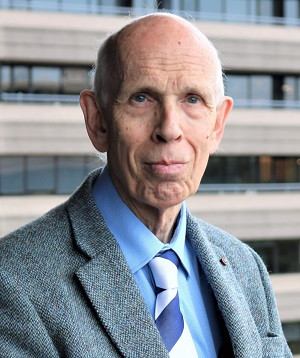
Prof. Ole H. Petersen
Cardiff University, UK
Title: The new pharmacology of intracellular calcium signaling
Ole Petersen CBE FRS is currently Professor of Bioscience at Cardiff University, Wales, United Kingdom. He came to Cardiff University at the beginning of 2010, succeeding the Nobel Laureate Sir Martin Evans FRS, as Director of the Cardiff School of Biosciences. Before his Cardiff appointment, he held the George Holt Chair of Physiology at the University of Liverpool (1981-2009). He graduated in Medicine and obtained his doctorate from the University of Copenhagen in his native Denmark.

Petersen’s research work deals with intracellular signalling mechanisms controlling secretion, with particular emphasis on the physiology and pathophysiology of the pancreas. He pioneered patch clamp single-channel and whole-cell current recording experiments on epithelial cells, discovering Ca2+-sensitive ion channels in these cells and subsequently characterized the local Ca2+ micro-domains that control these channels. He also discovered the role of excessive cytosolic Ca2+ signals in the development of the human disease acute pancreatitis and found ways to inhibit such toxic signals. As senior principal author, he has published more than 350 papers in competitive peer-review journals, including 14 articles in Nature, 5 in Cell and 3 major review articles in Physiological Reviews. Petersen is a highly cited investigator and received Research.com’s 2026 Leader Award in Biology & Biochemistry. His h-index is 109.

Petersen has received numerous national and international prizes and awards for his research work including the NOVO Nordisk Foundation's Jacobaeus Prize (Copenhagen, 1994), the Czech Science Academy's Purkyne Medal (Prague, 2003), the American Physiological Society's highest prize, the Walter B Cannon Memorial Award (San Diego, 2018), the Academia Europaea's Gold Medal (Barcelona, 2021) and the International Association of Pancreatology's highest award, the George E Palade Medal and Prize (Kyoto, 2022). His appointment as Commander of the Order of the British Empire (CBE - ‘for services to science’) was announced in the UK Government’s 2008 New Year Honours List and he received the award from Queen Elizabeth II personally at Buckingham Palace on 7th May 2008.

Petersen is an elected Fellow/Member of many national science academies of science, including the Royal Society (FRS - 2000), the German National Academy of Sciences Leopoldina (ML - 2010), the Royal Danish Academy of Sciences and Letters (1988), the Hungarian Academy of Sciences (2004) and was also a Medical Research Council (MRC) Professor from 1997 – 2017.

Petersen has received many Commissions of Trust. He has been Chief Executive Editor of several scientific journals including, most importantly, the American Physiological Society’s flagship journal Physiological Reviews. He served as President of the UK’s Physiological Society and the Federation of European Physiological Societies, Vice-President of the Royal Society and Academia Europaea, as well as Secretary General of the International Union of Physiological Sciences. He chaired the Biological Sciences Panel in the UK Government’s 2014 Research Excellence Framework (REF2014) and chaired the European Research Council’s, Physiology, Pathophysiology and Endocrinology Starting Grant Panel. He is currently Chair of the Hungarian Research Council’s Physiology-Neuroscience Panel.
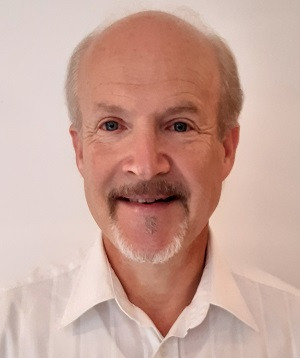
Prof. Ernst Wagner
Ludwig Maximilian University of Munich, Germany
Title: mRNA Delivery and Genome Editing by Evolutionary Carrier Design
Prof. Ernst Wagner is an expert on nucleic acid delivery since 1987. He is Chair of Pharmaceutical Biotechnology, Department Pharmacy, Ludwig-Maximilians-Universität (LMU) Munich, Germany (2001-2026), he was Director Cancer Vaccines, Boehringer Ingelheim Austria (1992-2001, world-wide first polymer-based gene therapy in 1994), 1987-1995 Group Leader at IMP Vienna and Vienna University Biocenter, 1985-1987 postdoc at ETH Zurich, 1985 PhD (TU Vienna, Austria). He is Academician of European Academy of Sciences, elected member of College of Fellows, Controlled Release Society (CRS), Honorary Professor at U of Sichuan. ≥ 537 publications, with ≥ 57 400 citations, h-index 121 (GS).
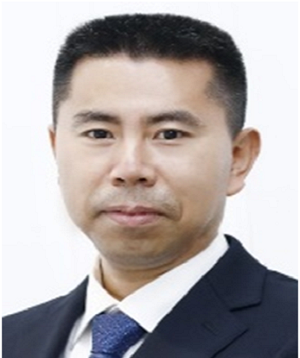
Prof. Baojun (Bruce) Xu
Beijing Normal-Hong Kong Baptist University, China
Title: To be confirmed
Dr. Xu is a Chair Professor at Beijing Normal-Hong Kong Baptist University (BNBU, a full English teaching university in China), a Fellow of the Royal Society of Biology, Fellow of the Royal Society of Chemistry, a Chartered Chemist (CChem), a Zhuhai Scholar Distinguished Professor, Department Head of the Department of Life Sciences, Program Director of the Food Science and Technology Program. Dr. Xu received a Ph.D. in Food Science from Chungnam National University, South Korea. He conducted postdoctoral research work at North Dakota State University (NDSU), Purdue University, and the Gerald P. Murphy Cancer Foundation in the USA from 2005 to 2009. He carried out short-term visiting research at NDSU in 2012 and the University of Georgia in 2014, followed by visiting research during his sabbatical leave (7 months) at Pennsylvania State University in the USA in 2016.

Dr. Xu is serving as Associate Editor-in-Chief of Food Science and Human Wellness, Associate Editor of Food Research International (2020-2026), Associate Editor of Food Frontiers, and guest editor for Antioxidants, International Journal of Molecular Sciences, Molecules, Journal of Fungi, Nutrients, Marine Drugs, Pharmaceutics, Plants, and Foods. He is also an Editorial Board Member of around 10 international journals, including Food Chemistry, Food Chemistry: X, Current Opinion in Food Science, Journal of Future Foods, etc.

Dr. Xu is an author of over 460 peer-reviewed papers and an editor of 14 books published in English. Among his publications, 14 papers are ESI highly cited papers. His publications have been cited over 31103 times with an h-index at 92 and i10 index at 320.

Dr. Xu received the inaugural President’s Award for Outstanding Research at the BNBU in 2016 and the President’s Award for Outstanding Service at the BNBU in 2020. Dr. Xu has been listed as one of Most Cited Chinese Researchers for exceptional research performance in the field of chemistry in 2023, 2024, and 2025. Dr. Xu has been listed as one of the world's top 2% of scientists by Stanford University for the past 6 consecutive years and has been listed as the Best Scientist in the world in the field of Biology and Biochemistry by Research.com in 2023, 2024, 2025, 2026. Prof. Xu was named a Highly Ranked Scholar-Lifetime (top 0.05%) by ScholarGPSTM in 2024 and 2025, ranking at #8 in Food Science and Technology in the world and #14 in Agricultural and Natural Sciences.
Prof. Masahide Takahashi
Fujita Health University, Japan
Title: To be confirmed
Education
1973-1979 Nagoya University School of Medicine (Japan) M.D.
1979-1983 Nagoya University Graduate School of Medicine (Japan) Ph.D.

Academic Positions
1983-1985: Research Fellow (Dana-Farber Cancer Institute, Harvard Medical School, Boston, U.S.A.)
1985-1990: Researcher (Aichi Cancer Center Research Institute, Nagoya, Japan)
1990-1995: Assistant Professor (Nagoya University School of Medicine)
1995-1996: Associate Professor (Nagoya University School of Medicine)
1996-2020: Professor (Nagoya University Graduate School of Medicine)
2003-2011: Director of Center for Neurological diseases and Cancer
(Nagoya University Graduate School of Medicine)
2012-2017: Dean of Nagoya University Graduate School of Medicine
2017-2020: Vice President of Nagoya University
2020, April: Professor Emeritus, Nagoya University
2020, April-present: Director and Professor
International Center for Cell and Gene Therapy
Fujita Health University
2023, June-present: Vice President of the Japanese Medical Science Federation

Membership in Professional Society

The Japanese Cancer Association
The Japanese Society of Pathology
The Molecular Biology Society of Japan
American Association for Cancer Research
Society for Neuroscience

Scientific Fame and Awards
1990: Young Investigator Award of the Japanese Cancer Association
1993: Academic Research Award of the Japanese Society of Pathology
2001: The Japan Pathology Award.
2006: Yomiuri-Tokai Medical Award (the Yomiuri Newspaper Co.)
2010: The Chunichi Cultural Award (the Chunichi Newspaper Co.)
2019: Medical Award of The Japan Medical Association
2020: Princess Takamatsu Cancer Research Fund Prize
2020: Medal with Purple Ribbon from the Government of Japan (A medal given to individuals who have made outstanding inventions or discoveries in the fields of science and technology)
Prof. John D. Imig
University of Arkansas for Medical Sciences, USA
Title: Multi-target drugs to treat complex cardiometabolic and kidney diseases
Dr. John D. Imig is an internationally recognized scientist whose research focuses on cardiovascular, metabolic, and kidney diseases, with particular emphasis on lipid mediators and epoxylipid signaling pathways. His laboratory has made foundational discoveries in eicosanoid biology, including the roles of epoxyeicosatrienoic acids (EETs) and soluble epoxide hydrolase in renal and cardiovascular disease, obesity, and diabetes. He has maintained continuous extramural research funding for over 25 years from the NIH, American Heart Association, industry, and foundation sources. Dr. Imig has published more than 250 peer-reviewed articles and holds multiple U.S. patents related to therapeutic development. His work has advanced from basic discovery to translational application, resulting in several licensed technologies and the co-founding of multiple biotechnology companies to move novel therapeutics toward clinical trials.
Prof. Marco Falasca
University of Parma, Italy
Title: Targeting Membrane Transporters in Pancreatic Cancer: From Molecular Mechanisms to Novel Therapeutic Strategies
Professor Marco Falasca is an internationally recognised biomedical scientist whose research focuses on the molecular mechanisms underlying cancer development and progression, with particular emphasis on pancreatic cancer. His work investigates the complex interplay between cellular signalling, metabolism, and membrane transport systems, with the aim of identifying novel molecular targets and developing innovative therapeutic strategies.
Professor Falasca has held senior academic and research positions in the United States, United Kingdom, Australia, and Italy and has established an extensive international research network. His research has contributed to understanding the role of signalling pathways and membrane transporters in tumour biology, cancer metabolism, disease progression, and therapeutic response.
A major focus of his current research is the identification and validation of membrane transporters as potential therapeutic targets in pancreatic cancer, bridging fundamental molecular discoveries with translational approaches for the development of more effective cancer treatments.
Prof. Gianluigi Forloni
Istituto Di Ricerche Farmacologiche Mario Negri IRCCS, Italy
Title: Repurposing drugs in neurodegenerative disorders: new perspective in therapeutic strategies
My scientific interest is focused on biological and genetic bases of Alzheimer’s disease (AD), Prion-related encephalopathies (PRE) and Parkinson’s disease (PD). Studies on pathogenesis and possible therapeutic approaches based on the role of protein aggregation in the neurodegenerative diseases and mechanisms of neuronal death using in vitro and in vivo models. More recently I have been involved in several clinical studies on neurodegenerative disorders, in particular I am the coordinator a preventive study in subjects at risk to develop fatal familial insomnia.

Dr. Forloni has served as a member of several committees of the European Community for the examination of projects in the neuroscience field. He is the President of the Italian Association for Brain Aging Research and a member of the European Academy of Sciences. From 2013 to 2024, Dr. Forloni has been a member of the Scientific Board of SINDEM (the dementia branch of the Italian Society of Neurology). He was a member of the Ministry of Health Temporary Committee "Stamina" from 2014 to 2015. He has been in charge of an elective course on the genetics of neurodegenerative disorders at the Medical School of the University of Milan and was invited to give lectures and seminars at numerous universities and research centers. Dr. Forloni is the author of more than 400 peer-reviewed scientific articles (H index Scopus = 79) and about 30 reviews or book chapters.
Prof. Lu Cai
University of Louisville, USA
Title: Metallomics: pharmacology, toxicology and human health
Lu Cai, MD, PhD, is a tenured Professor in the Departments of Pediatrics, Radiation Oncology, and Pharmacology & Toxicology, and serves as the Director of the Pediatric Research Institute at the University of Louisville School of Medicine. Holding an MD and PhD, his well-supported research focuses on cellular and molecular mechanisms underlying diabetes-induced cardiovascular complications, particularly the role of oxidative stress, trace elements (such as zinc and copper), and metallothionein in diabetic cardiomyopathy and nephropathy. Additionally, his work investigates environmental toxicology—including the health impacts of heavy metal exposure (such as cadmium) and low-dose ionizing radiation on metabolic diseases and intergenerational health. Throughout his career, he has led extensive mechanistic and translational studies aimed at developing therapeutic strategies to mitigate organ toxicity and chronic disease progression. Dr. Cai has received several career development awards and translational impact awards from Society of Toxicology, International society of Non-linear Dose Response, and Chinese American Diabetes Association. He currently served as Editor-in-Chief for the journals of World Journal of Diabetes and Dose-Response, and Associated Editor for the journals of Cardiovascular Toxicology and Molecular and Cellular Biochemistry
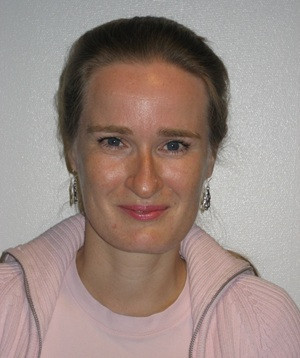
Prof. Leena Peltonen
University of Helsinki, Finland
Title: Solubility enhanced drug formulations towards better bioavailability
Professor Leena Peltonen has educational background both in physical chemistry and in pharmacy. She received the doctoral degree in 2001, and the title of docent in 2004 from the area of pharmaceutical technology in the University of Helsinki, Finland. After her dissertation she initialized the nanotechnological research in the Division of Pharmaceutical Technology, University of Helsinki, and she is currently Professor in Pharmaceutical Technology in Division of Pharmaceutical Chemistry and Technology, Faculty of Pharmacy, University of Helsinki. Her main research areas are nanoparticles, new excipients, solubility enhancing technologies, physicochemical analysis, dissolution and solubility testing and physical pharmacy. She has published more than 110 peer-reviewed scientific articles, 12 book chapters and 2 patents.